


When Water Becomes Music: My Encounter with Ëtëtung in Vanuatu
An extraordinary tradition from the South Pacific reminds us that some of the world’s most remarkable instruments are found in nature.
By Kike Calvo | Photography, Cultural Heritage & Expedition Diaries
There are sounds that stay with you long after a journey ends.
The calls of birds in a tropical forest. The rhythm of footsteps on an unfamiliar trail. The distant voices of a village awakening.
And then there is the sound of water becoming music.
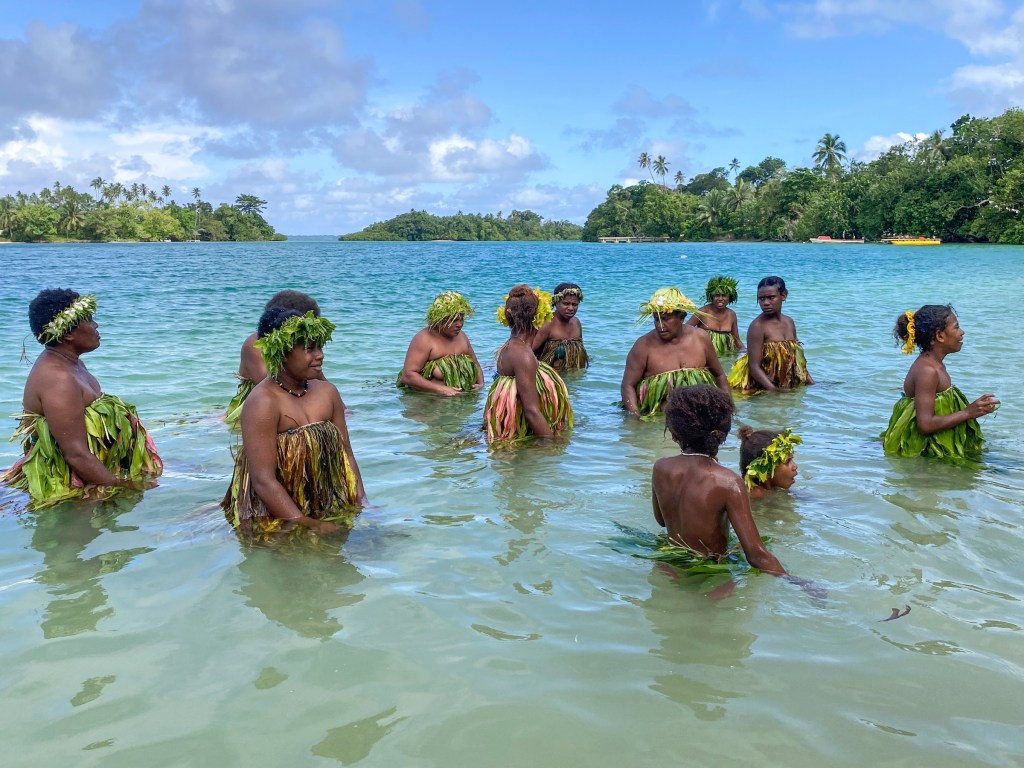
During my expeditions to Vanuatu in 2022 and 2023, I had the opportunity to document one of the most fascinating musical traditions I have encountered in my travels across 130 countries: Ëtëtung, the extraordinary water music performed by women of the Mwerlap cultural community.
No elaborate musical instruments. No electronic equipment. Just water, human hands, voices, rhythm, and generations of cultural knowledge.
What I witnessed was more than a musical performance. It was a reminder that human creativity can transform even the simplest elements of nature into extraordinary expressions of identity.
An Orchestra Without Instruments
Imagine standing beside the tropical waters of Vanuatu.
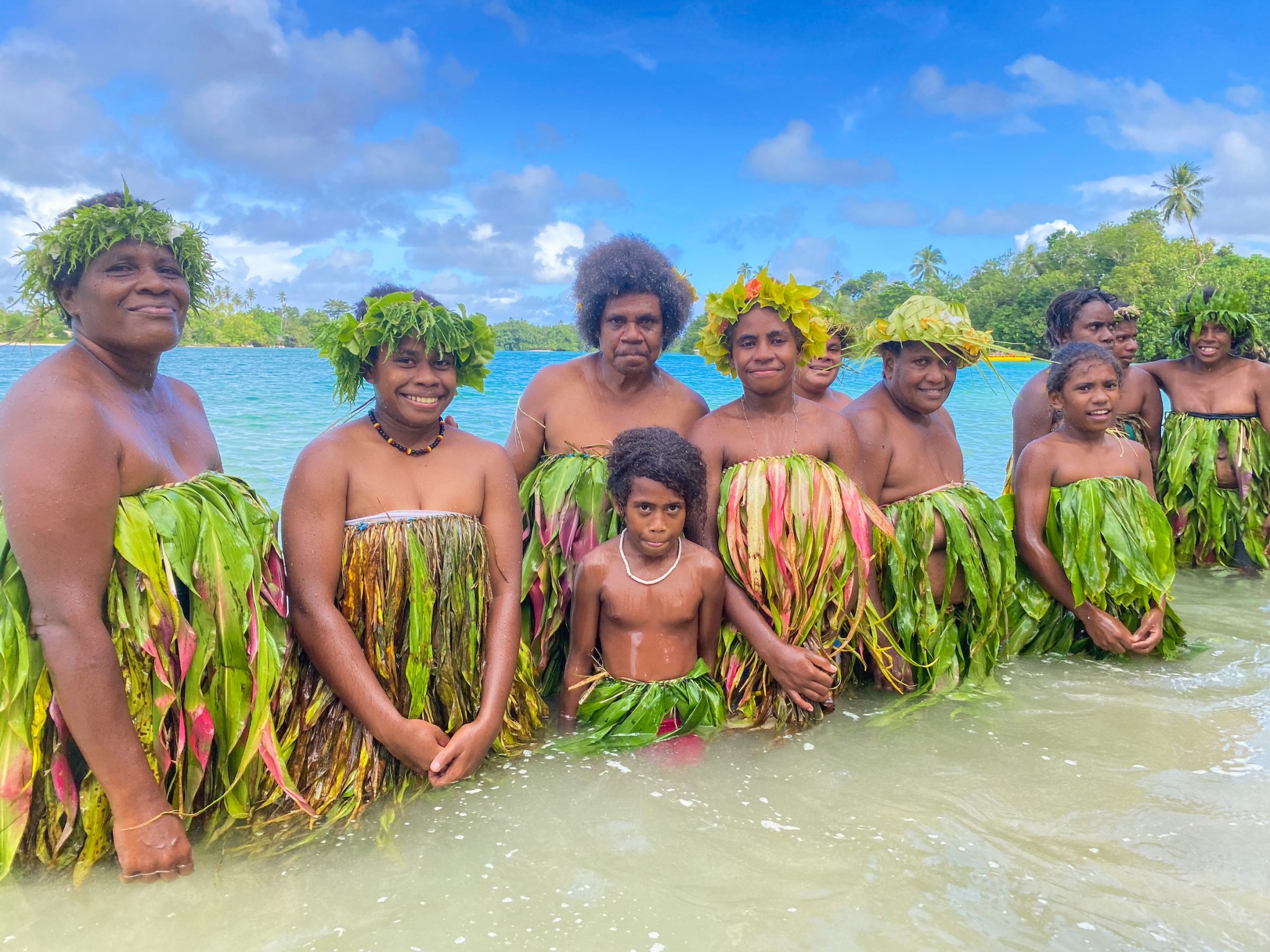
A group of women enters the water, gathering together in a carefully coordinated formation. Their hands move across the surface, sometimes striking it sharply, sometimes pushing beneath it, sometimes creating softer, resonating sounds.
Suddenly, the water begins to speak.
Deep percussion alternates with delicate splashes. Rhythms overlap. Voices join the composition.
What initially sounds spontaneous reveals remarkable precision, coordination, and artistry.
This is Ëtëtung.
The tradition is associated with Mwerlap-speaking communities originating from Gaua and Merelava in the Banks Islands of northern Vanuatu. Today, it is also shared through communities such as Leweton on Espiritu Santo.
Each movement is part of a musical language that has been transmitted across generations.
For a photographer, this creates a fascinating challenge: how do you photograph something whose essence is sound?
Photographing the Invisible
Photography has always been about more than recording what stands in front of my camera.
It is about trying to understand what is happening beyond the visible surface.
As I photographed the women performing Ëtëtung, I became fascinated by the relationship between movement, sound, and expression.
The water created constantly changing patterns. Hands disappeared beneath the surface and emerged again. Droplets caught the light. Individual gestures became part of a collective composition.
Yet the most important element could not be captured in a still photograph.
The music itself.
This is one reason I increasingly value combining photography with video, field recordings, conversations, and written observations. Each medium reveals something the others cannot.
A photograph can preserve a gesture.
A video can preserve a sequence.
But understanding a cultural tradition requires listening to the people who carry it forward.

When Nature Becomes a Cultural Archive
What interests me most about Ëtëtung is the relationship between the environment and cultural knowledge.
The sounds produced by the performers can evoke elements of their natural surroundings, including waves, birds, and atmospheric phenomena.
Water is not simply the setting.
It is the instrument.
It is also part of the environment in which this cultural knowledge developed.
In many societies, landscapes are repositories of memory. Rivers, forests, mountains, and oceans are intertwined with stories, traditions, and ways of understanding the world.
Ëtëtung offers a compelling example of this relationship.
It invites us to think about music not merely as entertainment, but as a form of knowledge passed between generations.
And it raises an important question:
What happens to cultural traditions when the environments that sustain them begin to change?
For island communities facing environmental pressures and climate-related challenges, this question carries particular significance.
Protecting cultural heritage and protecting the natural world are not always separate responsibilities.
Sometimes, they are profoundly connected.
The Women Keeping the Tradition Alive
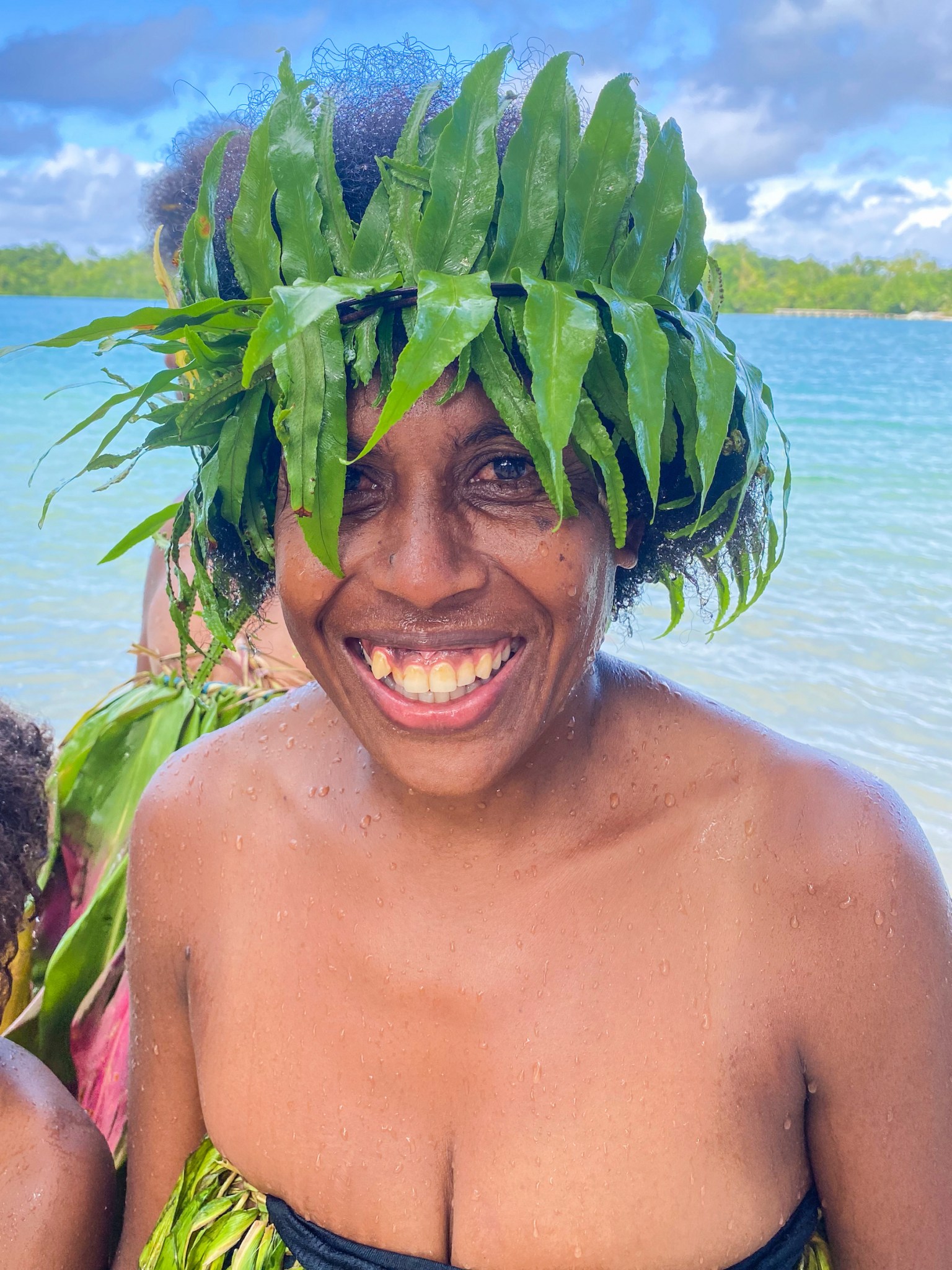
One of the most meaningful aspects of Ëtëtung is the central role of women in preserving and transmitting this musical practice.
The performers are not simply reproducing sounds for an audience.
They are participating in the continuation of a living tradition.
Through initiatives such as the Leweton Cultural Experience, Mwerlap cultural practitioners have also created opportunities to share their heritage with visitors while sustaining cultural knowledge within their community.
This is an important distinction.
Cultural traditions should not be understood only through the perspective of those who travel to observe them.
They belong first to the communities that create, practice, adapt, and preserve them.
As a visiting photographer and storyteller, my responsibility is to document with curiosity, respect, and an awareness that any photograph captures only a small part of a much larger story.
From Vanuatu to a Children’s Story
My encounters with the cultures and environments of the South Pacific have also influenced the way I think about storytelling for children.
In my illustrated book Water Girl: The Girl Who Saved the Planet, part of The Adventures of Luna, Little Explorer, Big World™, Luna connects with her friend Nari in Vanuatu.
The story brings together curiosity, the Pacific Ocean, water music, traditional navigation, plastic pollution, and the importance of protecting marine environments.
The book, illustrated by Hernán Gallardo with a foreword by Barbara Barrett, is an original fictional adventure rather than a retelling of Mwerlap oral traditions.
For me, the connection is personal.
Travel and exploration offer opportunities to discover ways of seeing the world that are very different from our own. Children’s literature offers another way to encourage that same curiosity.
I want young readers to ask questions about the planet, appreciate cultural diversity, and understand that the natural world is worth protecting.
Sometimes that curiosity begins with a simple question:
Can you really make music with water?
Watch the Water Music of Vanuatu
Photographs can offer a glimpse into this extraordinary practice, but Ëtëtung is something that deserves to be heard.
During my field documentation, I recorded performances with the support of the Leweton Cultural Experience.
Watch my field videos:
- The Mystical Water Music from Vanuatu — Ëtëtung
- Ëtëtung: Water Music from Vanuatu and the Mwerlap Diaspora
These recordings provide a window into the artistry, coordination, and cultural knowledge involved in the performances.
What the Water Taught Me
After years of traveling and photographing communities around the world, I continue to discover that some of the most memorable experiences are also the simplest.
A conversation.
A shared meal.
A song.
Or a group of women transforming water into music.
Ëtëtung reminded me that cultural knowledge is not always contained in books, museums, or monuments.
Sometimes, it exists in the movement of a hand, the rhythm of a voice, or the relationship between a community and the natural world.
And sometimes, the most important thing an explorer can do is put down the camera for a moment and listen.
Kike Calvo
Photographer, Author & Explorer
Fellow, The Explorers Club and Royal Geographical Society
National Geographic Certified Educator
Field documentation: Vanuatu, 2022 and 2023.
Continue exploring: Ëtëtung and its cultural heritage — LŪM Journal · Kike Calvo Photo Archive
Acknowledgment: Field filming was made possible with the support of Leweton Cultural Experience.