

The Colombian Amazon has long been a treasure trove for archaeologists, and recent discoveries at Cerro Azul in the Serranía de la Lindosa have shed new light on the complex relationship between early settlers and the animals they encountered. The rock art found here, rich in detail and mythology, provides a unique window into the lives of these ancient communities.
Discovering Cerro Azul
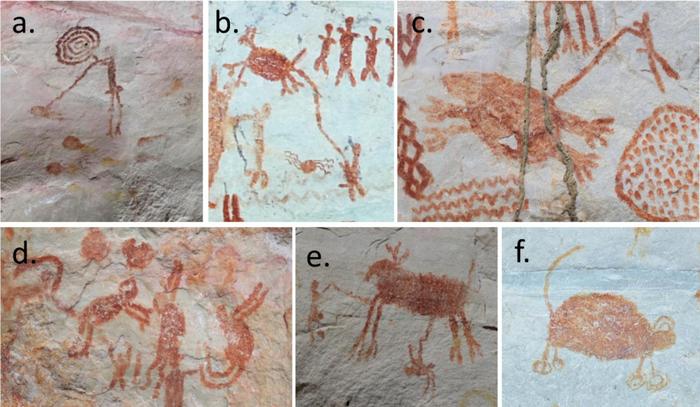
Located near the Guayabero River, Cerro Azul is a freestanding table-top hill adorned with stunning ochre paintings. These artworks, depicting a wide variety of animals and transformative human-animal figures, are believed to be among the earliest evidence of humans in western Amazonia, dating back approximately 12,500 years.
Insights from Rock Art and Excavations
The research, conducted by an international team from the University of Exeter, Universidad de Antioquia, Medellín, and the Universidad Nacional de Colombia, was published in the Journal of Anthropological Archaeology. It integrated zooarchaeological analysis of animal remains with a detailed study of the rock art. The findings revealed a diverse diet that included fish, mammals, and reptiles. However, the proportional representation of these animals in the art did not align with their dietary prevalence, suggesting that the artworks were more than mere records of hunting activities.
Cultural and Mythological Significance
Dr. Mark Robinson of the University of Exeter highlighted that these artworks offer profound insights into how early Amazonians viewed their world. The paintings depict not only the animals themselves but also the spiritual and mythological significance attributed to them. This underscores the deep, multifaceted relationships that these communities had with their environment.
Documenting the Artwork
Following a peace agreement in 2016 between the Colombian government and FARC, archaeologists resumed their investigations in the region. At Cerro Azul, 16 panels of ochre drawings were discovered, some accessible only through strenuous climbing. The research team cataloged 3,223 images using drone photogrammetry and traditional photography, identifying at least 22 different animal species.
Broader Implications
The absence of certain powerful animals, such as jaguars, in the rock art suggests cultural taboos and the symbolic importance of these creatures. Professor Jose Iriarte of Exeter pointed out that the differences between what was depicted in art and what was consumed as food highlight the power of myths in indigenous communities. These images provide a nuanced understanding of Amazonian cosmology, taboos, and supernatural beliefs.

Notable Archaeological Sites in Colombia
- San Agustín Archaeological Park: Features the largest collection of religious monuments and megalithic sculptures in South America.
- Tierradentro: Known for its underground tombs dating back to the 6th century AD.
- Ciudad Perdida: An ancient city founded around 800 AD, predating Machu Picchu.
Conclusion
The discoveries at Cerro Azul offer a captivating glimpse into the ancient Amazonian world, revealing the intricate relationships between early settlers and their environment. By studying these rock art sites, we gain a deeper appreciation for the cultural and spiritual lives of these communities, enriching our understanding of human history in the Amazon.
Source: University of Exeter. “Rock art and archaeological record reveal man’s complex relationship with Amazonian animals.” Published in the Journal of Anthropological Archaeology. DOI: 10.1016/j.jaa.2024.101613.
All photos: University of Exeter.
